
Rodent Control Cincinnati, OH
Hearing scratching in a wall, finding droppings, or seen a rat? Here is what is usually going on, how rodent control works, and what it costs in Ohio. It also covers what to do in Cincinnati if the problem is in a rental or on public property.
If you are hearing scratching or finding droppings, see how rodent control works below.
Why do rodents get into Cincinnati homes?
Rodents enter any building that offers food, shelter, and a way in. Cincinnati’s housing and sewer system give a few local reasons to inspect carefully.
- Older buildings. The median Cincinnati home was built in 1951, and about 41% of homes were built in 1939 or earlier, according to the U.S. Census Bureau’s American Community Survey (2020–2024). Older foundations and utility openings are places to check.
- Many renters. The same survey puts renter-occupied households at 60.2%. In multi-unit buildings, rodents can travel between units, so the fix often involves the building and not one apartment.
- Combined sewers. Roughly 40% of the Metropolitan Sewer District’s system is combined sewer, with more than 200 overflow outfalls (MSD). The city also baits public sewers. A smiley face on a sewer lid marks a treated sewer, according to the Cincinnati Health Department.
These facts are context. They do not show why a particular home has rodents. An inspection of the building does.
Is Cincinnati a “rattiest city”? Orkin ranked Cincinnati 25th on its 2026 list, up two spots from 2025. That list counts new rat and mouse treatments Orkin did from August 2025 to August 2026, not rats. The Cincinnati Health Department says rat complaints to the city are near all-time lows, with fewer than 200 expected in 2025 (Local 12). See rat complaint data by Cincinnati neighborhood for the full picture.
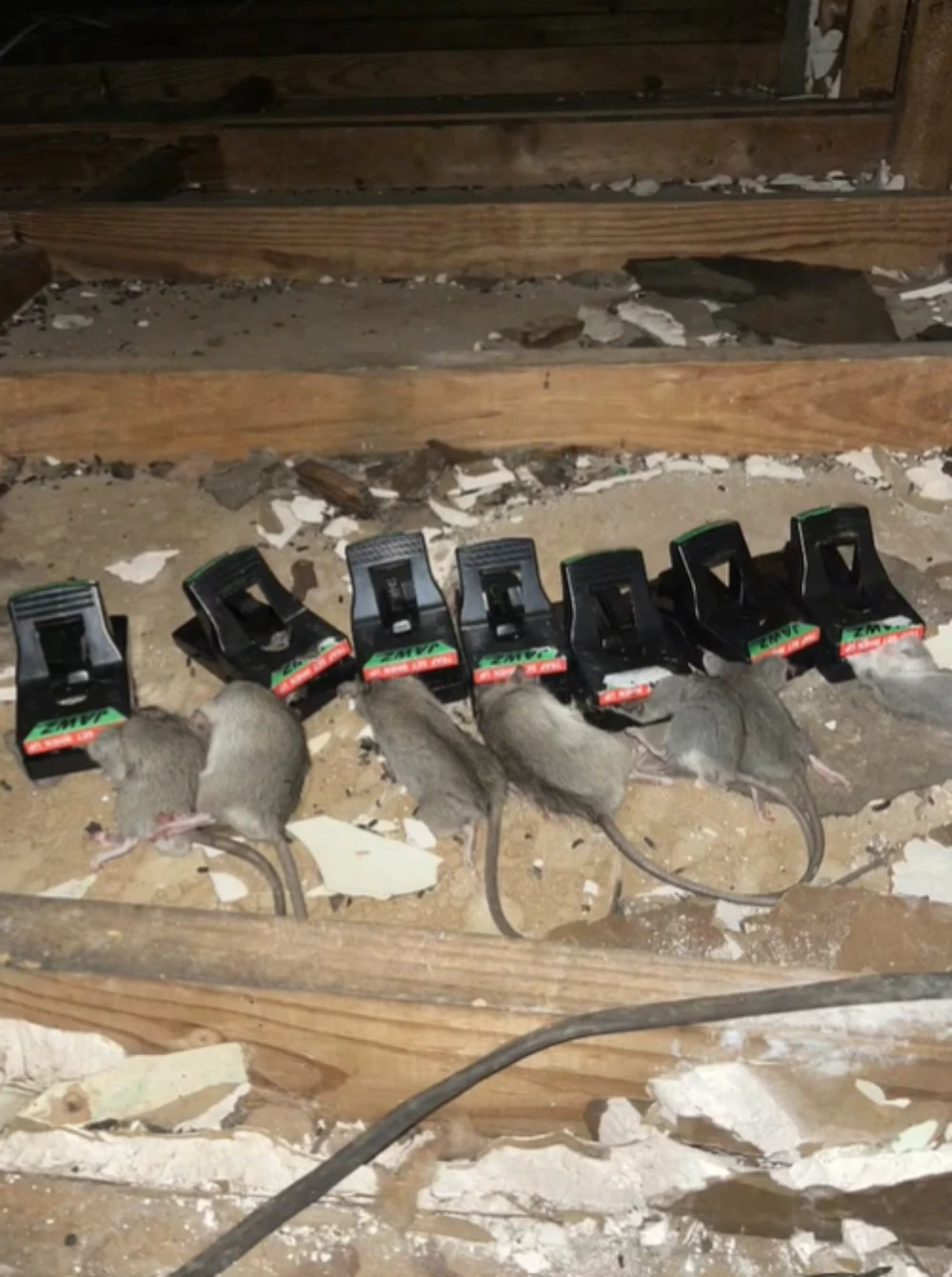
How can you tell if you have mice or rats?
Look at droppings, hole sizes, and where the signs are. Sounds alone do not tell you which animal it is. Scratching in a wall or ceiling is a common first report, but a mouse, a rat, or another animal can cause it. If the noise is coming from inside a wall, see what to do about mice in walls, including the smells and sealing.
| What to check | Mice | Rats |
|---|---|---|
| Droppings | Tapered, about the size of a grain of rice | Rounder, about the size of a raisin |
| Smallest hole they can use | About the size of a dime | About the size of a quarter |
| Species in Ohio | House mouse; white-footed and deer mice | Norway rat is the usual one. Roof rats are only an occasional occurrence in Ohio, per the Ohio Department of Natural Resources |
| Health note | Deer mice and white-footed mice can carry hantavirus (CDC) | The CDC names the rice rat and cotton rat as hantavirus carriers in North America |
Sources: droppings and hole sizes from OSU Extension; hantavirus carriers from the CDC.
Other signs the EPA lists: droppings around food packages, in drawers or cupboards, and under the sink; nesting material; chewing damage; entry holes; and stale smells from hidden areas (EPA). The CDC advises avoiding all wild rodents, because you cannot tell by looking whether one carries hantavirus. For a fuller checklist of droppings, gnaw marks and tracks, see the signs of mice or rats. For mice specifically, see mouse control in Cincinnati.
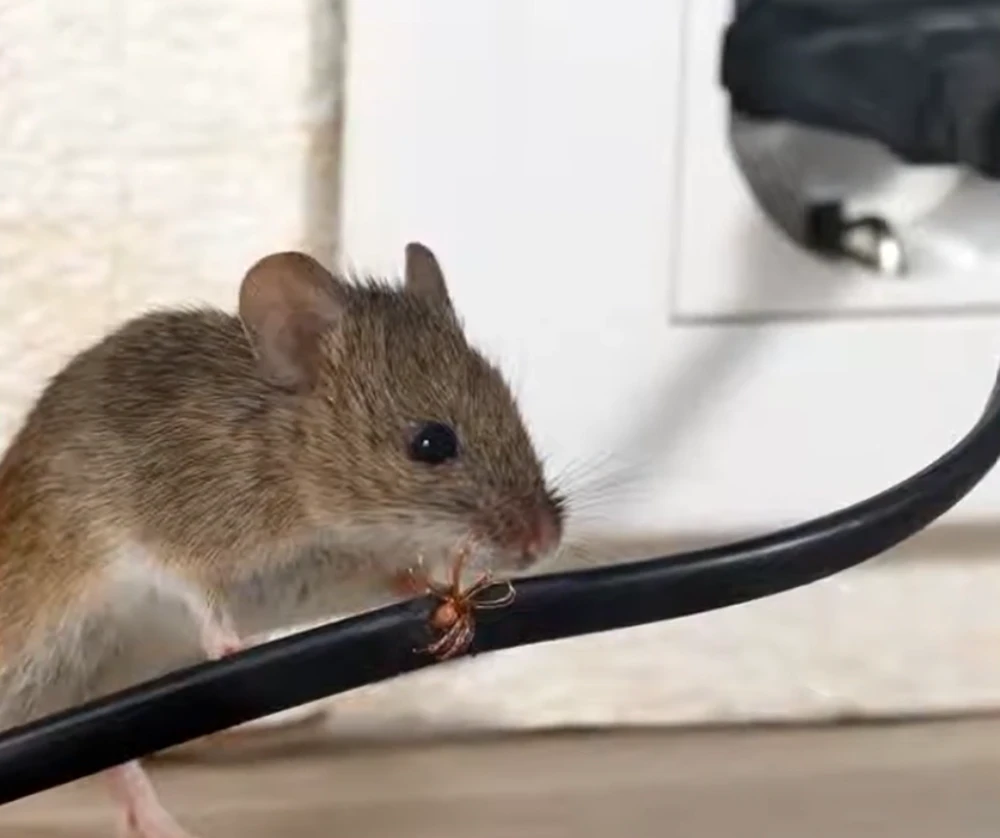
How does rodent control work?
The steps below describe what a thorough rodent control Cincinnati visit involves, drawn from CDC, OSU Extension, and EPA guidance. Each company’s process differs, so ask any company what it includes.
- Inspection. The inspector looks for droppings, gnaw marks, nesting material, and the openings rodents use. Rodents can fit through a hole about 1/4 inch wide (CDC), roughly the width of a pencil.
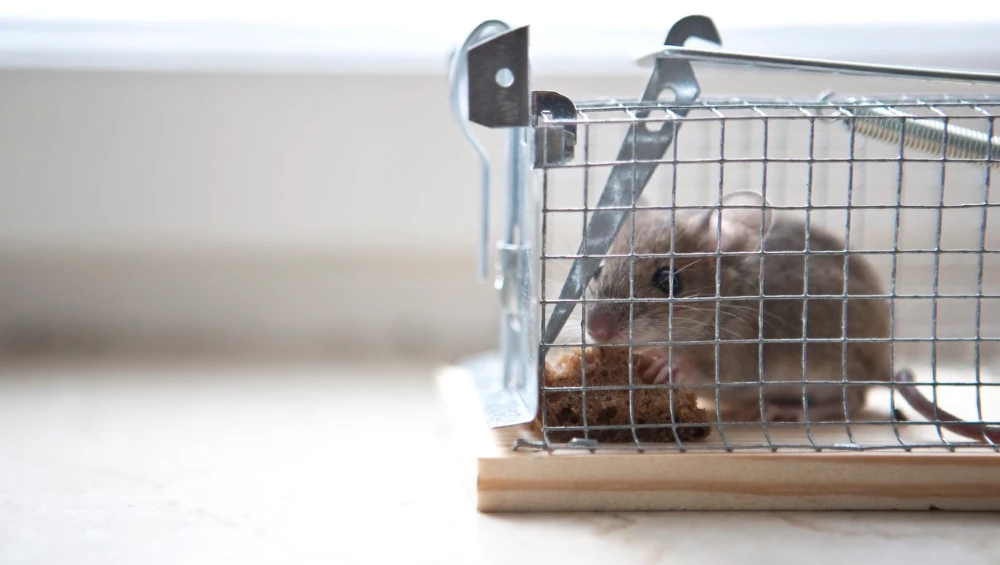
- Trapping. Snap traps are the method OSU Extension calls safest for homes. Glue traps can leave animals alive, and poison is not recommended in living spaces (OSU Extension). Trapping removes the animals, but closing the openings is a separate job; see what is involved in rodent exclusion in Cincinnati.
- Sealing entry points (exclusion). The CDC lists steel wool with caulk or spray foam for small gaps, and lath screen, metal, cement, hardware cloth, or metal sheeting for larger openings.
- Cleanup. Droppings and nests are cleaned using the CDC method described below.
- Follow-up. A check to confirm activity has stopped and that the sealed points are holding. One Cincinnati company publishes timelines of 2–3 weeks for mice and 3–4 weeks for rats. That is one company’s claim, not a standard.
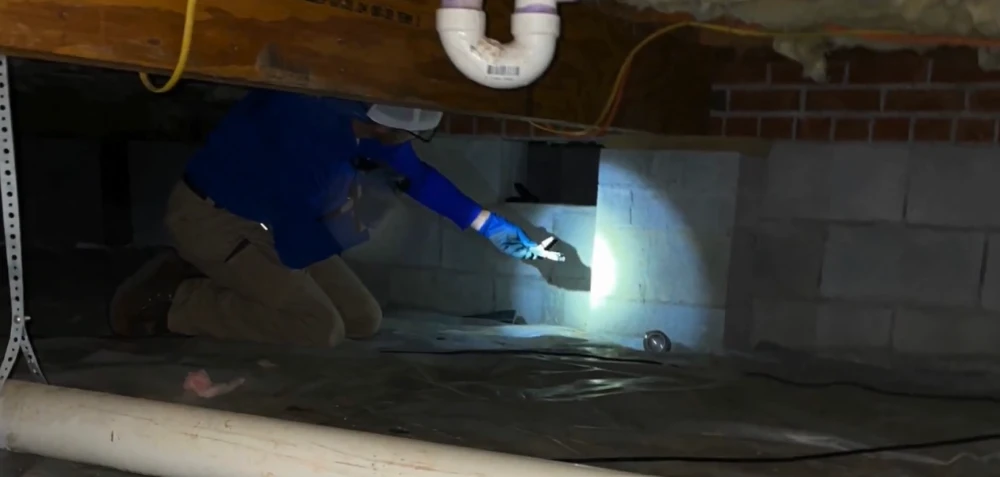
Trapping only or sealing entry points: which solves it?
Trapping removes the animals that are inside. It does not close the openings that let more in. That is why some people in online forum threads describe trap-only visits that did not stop the problem and ask for entry points to be found and sealed.
| Approach | What it does | Limit |
|---|---|---|
| Snap traps | Kill the rodent when it is caught. OSU Extension calls them the safest option in homes. | Leave the entry points open |
| Glue traps | Hold the rodent | Can leave animals alive, which raises disposal and welfare issues (OSU) |
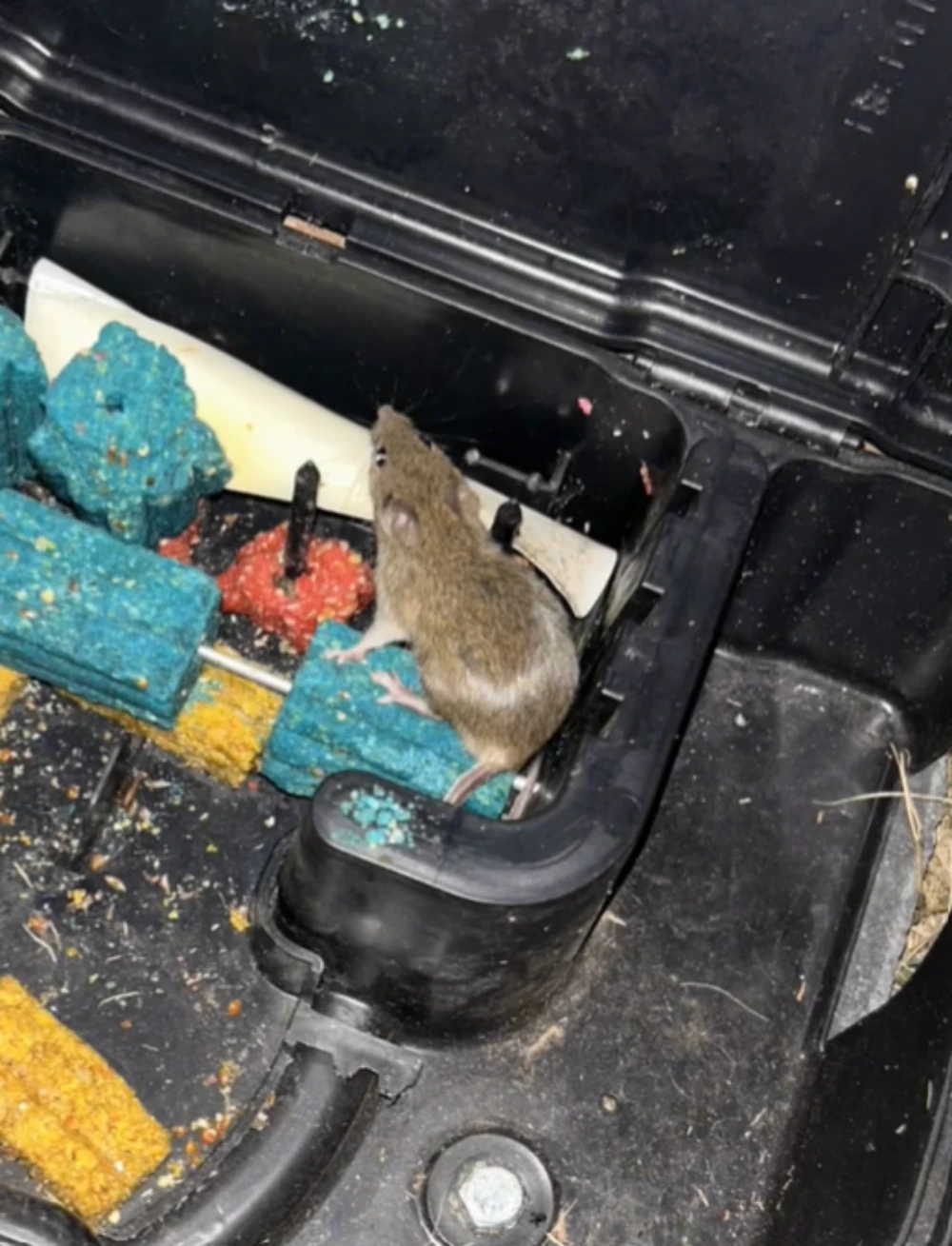
| Poison | Kills over time | Not recommended in living spaces. Rodents may die inside walls, causing odor and insects (OSU). Poisoned rodents can harm predators and scavengers (EPA) |
| Sealing entry points | Blocks the way in | Only works if every opening is found, so it follows an inspection |
What should you ask before accepting a rodent control quote?
- Does it include finding and sealing entry points, or only traps?
- What does the guarantee cover, and is it in writing?
- Is a recurring plan required, or is this a one-time job?
- Is the company licensed? The EPA advises asking to see the company’s license and verifying it with the state pesticide regulator, which in Ohio is the Ohio Department of Agriculture (EPA).
- Why is any extra work, such as insulation replacement, needed? Some customer reviews of pest companies mention being quoted for attic work during a mouse call. Whether that work is needed depends on what the inspection finds, and a company should be able to show you the damage.
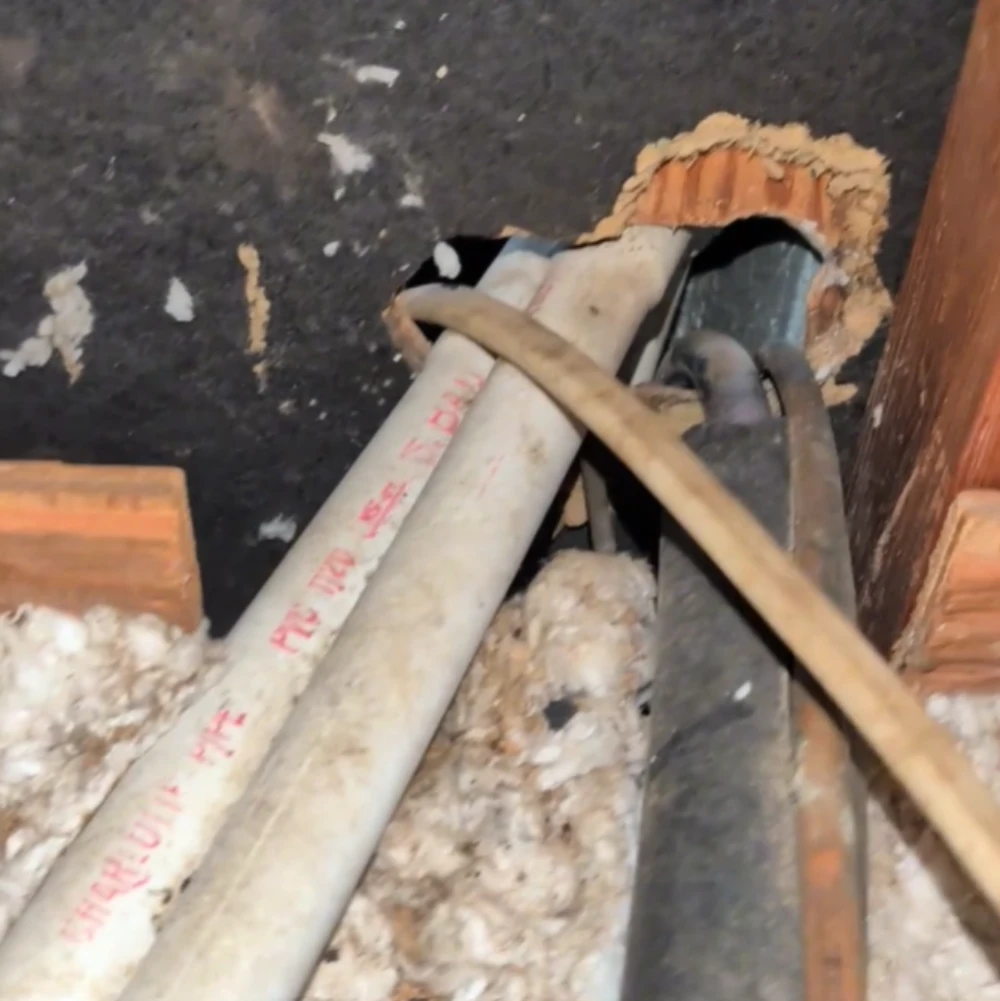
How much does rodent control cost in Cincinnati?
No independent survey of Cincinnati prices was found. The figures below are national estimates. None is a quote from any provider.
| Figure | What it covers |
|---|---|
| $150–$600 on average; mice $150–$550; rats $150–$600 | Rodent removal |
| $75–$150 | Inspection alone |
| $200–$400 each | Rodent-exclusion doors |
| $600–$1,000 | Cleanup service |
Several things move the price. These are how severe the infestation is, the size of the property, and how many entry points need sealing. How hard the attic or crawl space is to reach and how many follow-up visits are needed also matter.
Cost is easier to compare when each quote states whether it includes inspection, sealing, cleanup, and follow-up visits. See what rodent control costs in Cincinnati, with sourced price ranges. Every source used on this site is listed on the sources page.
Common questions about mice and rats in Cincinnati homes
Is it worth hiring an exterminator for mice?
It depends on the size of the problem. A few mice caught on snap traps may be manageable yourself, because OSU Extension calls snap traps the safest option in homes. Hiring help makes more sense in three cases. Droppings are inside walls or the attic. The mice keep coming back. Or you cannot find the entry points. Trapping alone does not close them.
Why do mice keep coming back?
Because whatever let them in is usually still there. A mouse can enter through a hole about the size of a dime (OSU Extension), and the CDC notes that rodents fit through gaps about 1/4 inch wide. Trapping removes the animals present. New mice can enter through the same openings if they are not sealed, or if food and shelter remain available. See why mice keep coming back for what a lasting fix includes.
What smell do rats hate most?
We found no EPA or university extension source showing that any scent drives rodents out of a home. Pages that name specific smells are mostly from pest-product sellers, so treat their claims with caution. Sealing entry points is the measure the CDC guidance points to.
What kills rodents naturally?
Nothing described as natural reliably clears an infestation. Among methods that work, OSU Extension calls snap traps the safest option in homes. It does not recommend poison in living spaces, because rodents can die inside walls and cause odor and insects. The EPA also warns that animals eating poisoned rodents can be harmed. Mouse and rat myths and what works covers more of these claims.
What should you do if you hear mice in your walls?
Look for droppings and possible entry points first, such as gaps around pipes and along the foundation. If you find droppings, clean them using the CDC method and do not sweep or vacuum them. Traps may catch the mice inside, but they will not close the way in.
Should you be concerned if you see a rat in your yard?
A rat outdoors means it is finding food or shelter nearby. Pest control sources commonly point to open garbage, compost piles, and cluttered yards. If you see rats around a rental property or on public property, you can report it to the city. For burrows, yards and what rat control involves, see rat control in Cincinnati.
Who is the best pest control company in Cincinnati?
No single ranking settles that. Review sites show a wide spread of ratings, and many companies have small numbers of reviews. Compare licensing, whether a written quote includes sealing entry points, and what the guarantee covers. The checklist in how to choose a rodent control company in Cincinnati goes through each one.
Cincinnati rodent resources: who to call about rats, renters, and landlords
- City 311. Dial 311, call 513-591-6000, or use 5916000.com to report a rodent problem. The city’s 311 mouse-problem page says an inspector will do an onsite inspection within 4 days of a report.
- Healthy Homes Line. For an apartment infested with rats, the Cincinnati Health Department lists 513-352-2908.
- Renters. Tell your landlord in writing and keep dated photos and notes of droppings, sightings, and damage. This gives the city and the landlord a record. Tenant rights in Ohio depend on your lease and circumstances.
Where have rat complaints been highest?
Based on Cincinnati Health Department data reported by Local 12 in November 2025, over the last six years:
| Neighborhood | Measure | Complaints |
|---|---|---|
| Pendleton | Per 100,000 residents | 453 |
| Camp Washington | Per 100,000 residents | 364 |
| South Fairmount | Per 100,000 residents | 310 |
| Westwood | Total | 144 |
| East Price Hill | Total | 129 |
| West Price Hill | Total | 88 |
These are complaints to the city, which primarily involve businesses according to the Health Department. They show where people reported rats, not how many rats live there.
How do you clean up mouse or rat droppings safely?
The CDC says not to sweep or vacuum mouse or rat urine, droppings, or nests. Its steps:
- Wear gloves.
- Spray the contaminated area with disinfectant until it is very wet.
- Let it soak for 5 minutes.
- Wipe it up with paper towels.
- Put the waste in the garbage.
- Mop the area with disinfectant.
- Wash your hands twice: first with gloves on, then bare.
A bleach solution of 1.5 cups of household bleach in 1 gallon of water (1 part bleach to 9 parts water) is the CDC’s recommended disinfectant. Four rodents carry hantavirus in North America: the deer mouse, white-footed mouse, rice rat, and cotton rat. For more on hantavirus and when to hire help, see hantavirus and safe droppings cleanup.
Is rodent poison safe around pets and children?
It carries risks. The EPA requires consumer rodenticides to be sold with bait stations that securely contain the poison, and warns that predators or scavengers that eat poisoned rodents can be harmed. OSU Extension does not recommend poison in living spaces.
Request help
Tell us what you are seeing and where. An independent pest control company may contact you by phone.
Prefer to call? (513) 299-5777
Not ready to fill in the form here? You can also use the full request page to describe what you are seeing and where.