
Rat Control in Cincinnati, OH
Seeing rats in a Cincinnati yard, basement or home? This page explains what burrows and droppings can mean, what rat control generally involves, which city office takes rat complaints, and how to request help.
Quick facts
Area: Cincinnati, Ohio, including Pendleton, Camp Washington, South Fairmount, Westwood, East Price Hill and West Price Hill.
Price: The company that does the work sets its own price. This site does not set prices. See typical price ranges for rodent control in Cincinnati.
What a visit includes: See the five usual steps.
Phone hours: Monday to Saturday, 9:00 AM to 6:00 PM.
What signs point to rats?
Signs usually show up before you see the animal. The CDC lists droppings, often found in cabinets, drawers and other hidden areas, and gnaw marks, which are often near droppings. Droppings that keep coming back after you clean an area mean rodents are likely still active there.
Rats leave a few clues of their own. An extension.org guide describes shiny black, capsule-shaped droppings about ¾ to 1 inch long, worn paths through grass, and dark, greasy marks along foundation walls. A University of Missouri Extension guide adds tracks in mud or dust and gnawing or movement noises in walls and attics, especially after dusk.
Not sure whether it is mice or rats? The CDC says that if droppings, urine spots or gnawing continue after a week of mouse trapping, you may have rats. For a closer comparison, see signs of mice or rats.
Which rat is it? The Norway rat in Ohio
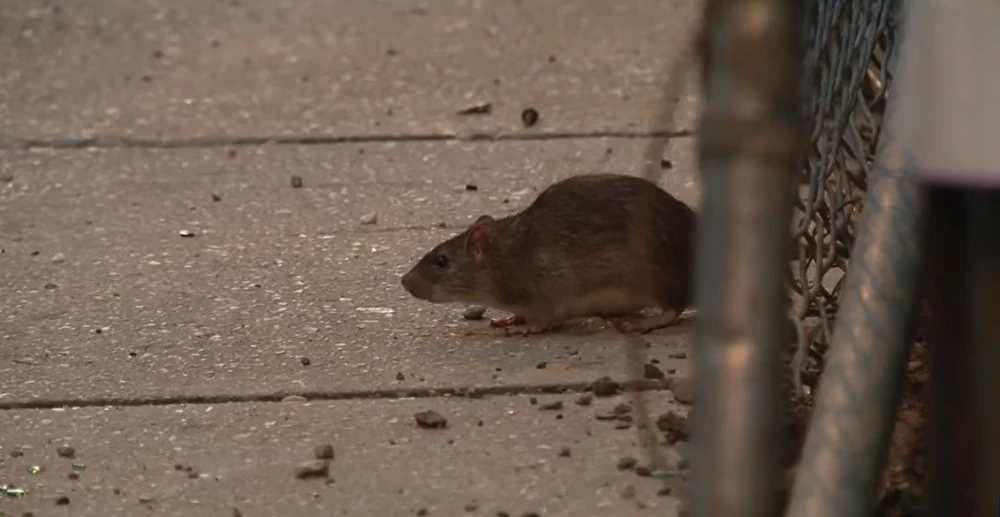
The Ohio Department of Natural Resources profiles the brown rat, formerly called the Norway rat (Rattus norvegicus), as a large member of the mouse family with a grayish-brown coat and a long, scaly tail. ODNR lists woodlands, open fields, garbage dumps, sewers and basements among the places it finds food and shelter, and says it eats almost anything edible.
ODNR also notes that brown rats breed year-round, with up to 12 litters a year of 8 to 10 young, and live in groups. The Missouri guide puts the practical point plainly: as long as rats have food and cover, their population will thrive. That is why rat control is as much about food, water and shelter as it is about the animals themselves.
Rats in yards: burrows, garbage and compost
Norway rats dig. The Missouri guide says their burrows are often found next to buildings, along fences, under low vegetation and debris, beneath compost piles or garbage cans, and under outdoor buildings. Rats usually travel within about 100 to 150 feet of their burrows and seldom go beyond 300 feet.
The extension.org guide says the main opening of a Norway rat burrow is 2 to 4 inches across and smooth from use, often with loose soil fanned out around it. A burrow typically has one main entrance and one or two hidden exits, and the tunnels are generally shallow, no deeper than about 18 inches. Smooth, hard-packed soil at the opening, worn paths, droppings and a musky smell point to an active burrow.
Two cautions from that guide: confirm that a hole really is a rat burrow before acting, since a foundation may be at risk, and make sure no rats are inside before filling it, because trapped animals can cause a severe odor as they decompose.
What the CDC says to change in the yard
- Use a thick plastic or metal garbage can with a tight lid and no holes.
- Keep compost bins at least 100 feet from the house.
- Keep grills and outdoor cooking areas clean, and place bird feeders away from the house with squirrel guards.
- Keep woodpiles at least 100 feet from the home and raised at least one foot off the ground.
- Trim grass and shrubs within 100 feet of the home and clear brush and weeds.
These points come from the CDC page on how to seal up and prevent rodents.
Rats in basements and sewer-connected homes
ODNR lists sewers and basements among the places brown rats find food and shelter, so a rat in a basement may have come from outside. The Missouri guide says rats can squeeze through openings larger than ½ inch and can gnaw smaller holes wider, and it recommends grates with openings under ¼ inch on floor drains and sewer pipes. The CDC adds that gaps around pipes, vents, utility lines and the foundation-to-ground junction are common entry points. For how complaints are spread across the city, see rats in Cincinnati neighborhoods. If the rats are below the house, see rats in a crawl space or basement.
If you see rats in the street or going in and out of a sewer, the City of Cincinnati has a separate Rats in Sewer request. The city says a Cincinnati Health Department specialist contacts the person who reported it to assess whether the sewer needs baiting, and that baiting is prioritized by complaint and by census tract.
What does rat control involve?
Anyone comparing a rat exterminator in Cincinnati will meet the same set of tasks. Published guidance treats them as separate steps, and rat removal alone does not cover all of them:
- Find where rats are active and getting in. The CDC lists places to check inside (under and behind cabinets, around windows, doors, pipes and vents) and outside (roof edges, foundation gaps, utility lines).
- Cut off food, water and shelter. The CDC calls removing these the best way to prevent infestations.
- Trap. The CDC recommends snap traps made for the type of rodent, not glue or live traps. Rats are cautious and may take several days to approach a trap, so pre-baiting can help. Check traps daily and keep trapping until nothing is caught for a week with no new signs.
- Use poison only with care. The CDC says to use poison or bait stations only if an infestation persists, to choose EPA-registered products, to follow label directions and to keep them away from children and pets.
- Seal entry points. The extension.org guide says to fill burrows and seal entry points once the rats are gone, and the CDC lists materials such as steel wool, caulk, hardware cloth and metal. See rodent exclusion in Cincinnati for how sealing works.
- Clean up safely. The CDC cleanup guidance says not to sweep or vacuum droppings or nesting material, to wear rubber or plastic gloves, to let a disinfectant soak for 5 minutes or as the label directs, and to air out the space for 30 minutes first.
For a broader overview, the homepage covers rodent control in Cincinnati.
What does a rodent control visit usually include?
The CDC lists three basic steps for rodent control: seal up holes, trap the rodents inside, and clean up. Most visits follow these five steps.
- Inspection. Look for droppings, gnaw marks, nesting material and openings. Mice can fit through a gap about 1/4 inch wide.
- Trapping. Ohio State University Extension calls snap traps the safest option in homes.
- Sealing entry points. The CDC suggests steel wool plus caulk or spray foam for small gaps, and hardware cloth or metal sheeting for larger openings.
- Cleanup. Droppings and nests should be cleaned up using the CDC method, not swept or vacuumed dry.
- Follow-up. Ask whether a follow-up visit is included.
This is general guidance, not a promise from any company. Visits, timing and prices differ by company, so ask what yours includes.
Who to call in Cincinnati about rats
For rats inside or outside a building, the City of Cincinnati’s rat problem or infestation page routes reports to the Cincinnati Health Department. The city page lists these ways to report:
- Call 311 or 513-765-1212. The page says the line is available 24/7.
- Submit a request online through 311cincy.com.
- The page lists the Health Department at 513-352-2908.
According to the city, a Health Department inspector conducts an onsite inspection within 4 days, and if a violation is found, orders are issued to the responsible party. For a problem inside a residence, the inspector needs permission to enter to view the issue.
How much does rat control cost?
The cost depends on what the job includes. Trapping, sealing entry points and cleanup are different pieces of work, and a burrow in a yard is a different job from rats in a basement. Because prices vary by property and by company, this page does not quote one. For ranges and what they cover, see how much rodent control costs in Cincinnati.
Common questions about rat control
What attracts rats to a yard?
The CDC says rodents need food, water and shelter. The Missouri guide lists garbage, decayed food and pet food as food sources and debris, stored materials and vegetation as cover. The CDC also advises keeping compost bins at least 100 feet from the house, keeping grills clean, placing bird feeders away from the house, and trimming grass and shrubs near the home.
Are rats in my yard dangerous?
They can be. The CDC says rodents can carry many diseases that spread through handling them, contact with droppings, urine or saliva, or bites, and that you cannot tell whether a rodent is infected by looking at it. Examples it lists include leptospirosis, rat-bite fever, salmonellosis and hantavirus. Poison baits are also dangerous to people and pets if misused.
Who do I call about rats in Cincinnati?
Rat reports in the city go to the Cincinnati Health Department through 311. The steps are covered under who to call about rats in Cincinnati above. Renters can also read how renters and landlords report rodents in Cincinnati.
Do rats leave on their own?
None of the sources used for this page describe rats leaving on their own. The Missouri guide says rat populations thrive as long as food and cover are available, and the CDC calls removing food, water and shelter the best way to prevent infestations.
How do you find where rats are getting in?
Start with the places the CDC lists, then look for the signs the guides describe: gnaw marks, droppings, tracks, worn runways and dark greasy rub marks along walls. The Missouri guide says to close any opening larger than ¼ inch, since rats can squeeze through openings over ½ inch and enlarge smaller holes by gnawing.
Request help
Describe the problem using the request form on the homepage. You can also call (513) 299-5777, Monday to Saturday, 9:00 AM to 6:00 PM.
If you have seen rats in your yard, basement or home, you can request help with rats and say where you saw them.