
Mice in the Attic: Signs, Damage, and Next Steps
Scratching overhead at night, droppings in the insulation, or a gnawed opening near the roofline can all point to mice in the attic. This page covers the signs, how mice differ from squirrels, what damage to expect, how mice get in, and how to request help in Cincinnati, OH.
What are the signs of mice in an attic?
No single sign settles it, but several together usually point to mice in attic spaces. A Cornell mouse fact sheet lists these signs:
- Droppings. Mouse droppings are about 1/8 to 1/4 inch long, with pointed ends.
- Gnaw marks. Tooth marks on baseboards, doors, cabinets, packaged goods and pipes, plus piles of wood chips or shavings.
- Runways. Dark, greasy smudges along walls, and worn paths in dirt or insulation.
- Urine stains and a musky smell.
- Noise. Scuttling, squeaking or gnawing, mostly at night. Mice are mainly nocturnal and feed mostly at dusk and dawn.
The same fact sheet notes that other animals make similar sounds, so noise alone is not conclusive. For a side-by-side look at both rodents, see signs of mice or rats.
Mice or squirrels?
Sounds overhead can come from either animal, so timing, droppings and opening size help. Published sources describe these differences:
| Mice | Squirrels | |
|---|---|---|
| Usual activity time | Mainly nocturnal; feed mostly at dusk and dawn (Cornell) | Active in the daytime, with early morning the most likely time to hear them (Extension). Flying squirrels are the exception and are active at night (Penn State Extension). |
| Droppings | About 1/8 to 1/4 inch long, with pointed ends (Cornell) | About 3/8 inch long and 1/8 inch wide, rounded at the ends; some squirrels use a single latrine area (Extension) |
| Opening they can use | Gaps about 1/2 inch high (Cornell); a dime-size hole (OSU Extension) | Gaps about the size of a quarter; they often chew a small opening wider (Extension) |
| Sounds | Scuttling, squeaking, gnawing (Cornell) | Scratching, running, climbing and clawing, plus chirping and barking (Extension) |
Because flying squirrels are active at night, nighttime noise alone does not rule squirrels out. If squirrels turn out to be the cause, the Ohio Department of Natural Resources says to check for young before evicting a squirrel and to seal the entrance afterward.
What damage can mice do (insulation, wiring)?
Insulation
The Cornell fact sheet lists insulation among the things mouse urine, droppings and gnawing can ruin. Purdue Extension also says mice can damage insulation in walls and attics, using livestock buildings as its example.
Wiring
Cornell says mice chewing on electrical wires can cause fires and disable appliances. Purdue Extension says mice chewing wiring and insulation in large appliances can cause electrical shorts and fire hazards.
How do mice get into an attic?
Mice do not need a large opening. Cornell says they can squeeze through gaps about 1/2 inch high, and OSU Extension says a hole the size of a dime is large enough. The CDC’s hantavirus risk-reduction recommendations use a lower threshold and tell homeowners to seal gaps and holes larger than 1/4 inch, inside and outside the home.
Roof gaps and vents
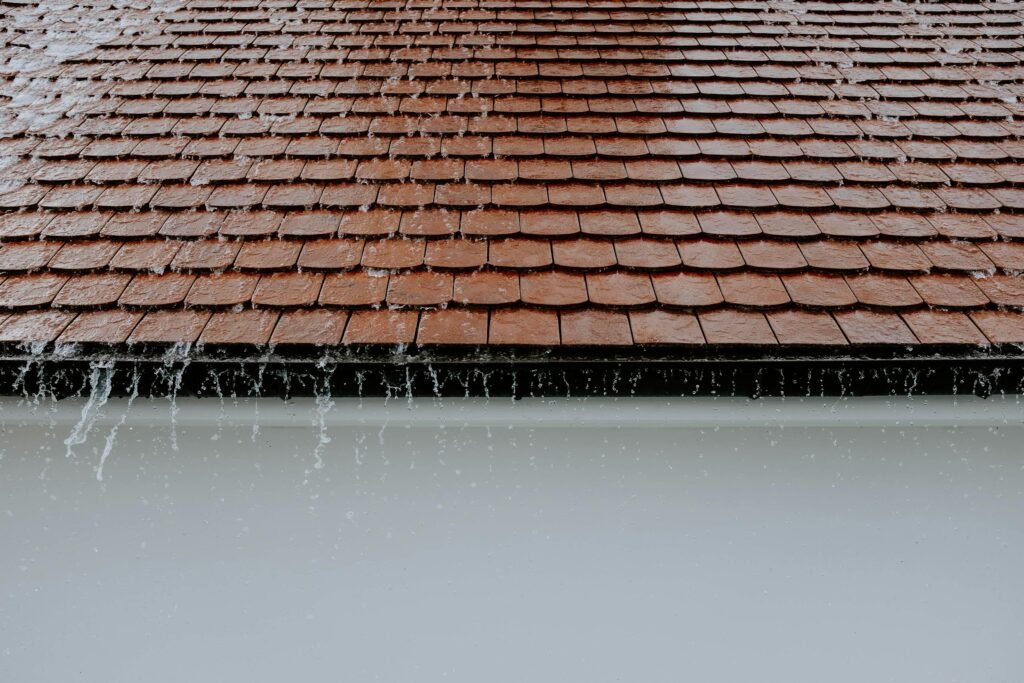
For the attic specifically, the CDC says to check for unscreened attic and crawlspace vents and to seal gaps around the roof, eaves, gables and soffits.
What counts as a seal
The CDC lists cement, metal or lath screen, wire screening and hardware cloth as suitable materials. It says steel wool can be used if caulk goes around it, and that caulk or expanding foam alone is usually not sufficient. Sealing is covered in more detail under rodent exclusion in Cincinnati.
Droppings and insulation: safety
Droppings and nests in an attic call for the same precautions as anywhere else in a home. The CDC’s hantavirus risk-reduction recommendations say:
- Do not sweep or vacuum droppings or urine until the area is disinfected.
- Wear rubber, latex, vinyl or nitrile gloves.
- Spray droppings and urine with a disinfectant or chlorine solution until thoroughly soaked.
- A bleach solution is 1 1/2 cups of household bleach in 1 gallon of water, made fresh daily.
- Pick up the soaked material with a paper towel and put it in the garbage.
- For a nest or a dead rodent, soak it with disinfectant, then seal it in a plastic bag placed inside a second sealed bag.
Droppings in insulation need careful handling, so read about hantavirus and droppings cleanup.
The CDC guidance covers droppings, urine, nests and dead rodents. It does not give specific steps for contaminated attic insulation, so this page does not either.
Removal and sealing
This page does not cover how removal is done. Mouse control in Cincinnati explains what mouse control involves, and sealing entry points covers how openings are closed. The CDC steps above, including sealing gaps larger than 1/4 inch and checking attic vents and the roofline, apply to attics too.
Common questions about mice in attics
How do I know it is mice and not squirrels?
Check timing and droppings. Mouse droppings are about 1/8 to 1/4 inch long with pointed ends, while squirrel droppings are about 3/8 inch long with rounded ends, and squirrels are mostly active in the daytime. Flying squirrels are active at night, so timing alone is not conclusive. The comparison table above has the sources.
Can mice damage attic insulation?
Cornell lists insulation among the things mouse urine, droppings and gnawing can ruin, and Purdue Extension says mice can damage insulation in walls and attics.
How do mice get into an attic?
Through small openings. Cornell puts the gap at about 1/2 inch high and OSU Extension says a dime-size hole is enough. The CDC says to check unscreened attic vents and gaps around the roof, eaves, gables and soffits.
Can attic mice chew wires?
Cornell says mice chewing on electrical wires can cause fires and disable appliances, and Purdue Extension says chewed wiring and insulation in large appliances can cause electrical shorts and fire hazards.
Request help
Describe what you hear, see or smell and where in the home on the request help page. An independent pest control company may contact you by phone.
Phone: (513) 299-5777. Open Monday–Saturday, 9:00 AM – 6:00 PM.